





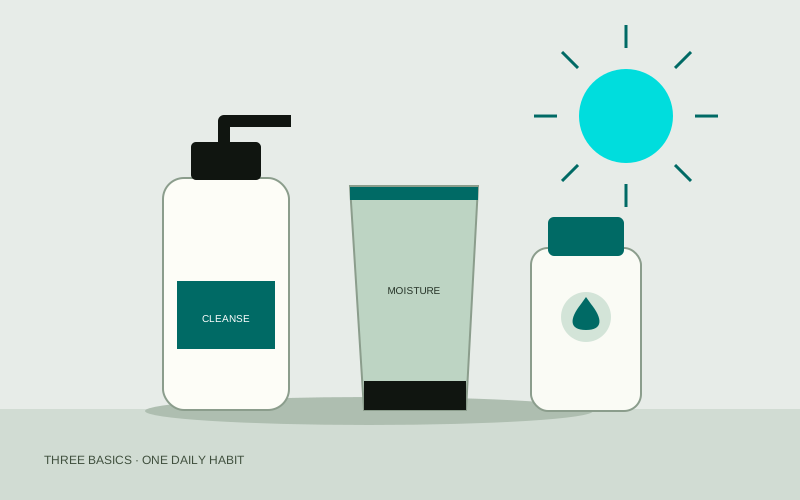
A shiny forehead does not mean every part of your face needs a stronger cleanser. If your skin is oily in some areas and dry in others, begin with a small, repeatable routine: gentle cleansing, suitable moisturizer, and sun protection. Add more only when you have a clear reason.
Start with what you notice across your face
Combination skin generally describes a mix of oilier and drier areas, often with more shine across the forehead, nose, and chin. Treat that description as a useful observation, not a diagnosis for every rash or breakout.
For a few ordinary days, make a short note: where you see shine, where skin feels tight, and which products you use. You do not need to rate your face every hour. The point is to avoid buying for one area while overlooking another. Pain, persistent irritation, or troublesome acne deserves individual advice.
A simple morning routine
1. Cleanse gently
The AAD recommends a mild, gentle face wash for oily skin and cleansing up to twice daily and after sweating. It cautions against scrubbing or harsh cleansing. Oily-skin guidance Use the product’s directions and assess comfort, rather than aiming for a squeaky-clean feeling.
2. Apply a suitable moisturizer
Oily skin can still need moisture. Look for an oil-free, non-comedogenic formula; those labels are useful shopping clues, not a promise that a product will suit everyone. Why acne-prone skin may need moisturizer
For combination skin, a practical starting point is to use your chosen moisturizer according to its label and observe whether the drier areas need more attention. Avoid buying a separate product for every zone before you know how the basic routine feels.
3. Include sun protection
Choose a broad-spectrum, water-resistant sunscreen with SPF 30 or higher. Apply it to exposed skin and reapply at least every two hours outdoors, and after swimming or sweating, as directed. Shade and protective clothing matter too. Sunscreen guidance
A moisturizer with sunscreen can simplify the shelf, but check the label for the protection you need and follow the application directions. Do not assume any amount of any SPF moisturizer provides the same protection.
A simple evening routine
Cleanse and apply your moisturizer. Remove makeup before bed rather than leaving it on because your skin feels dry. The AAD’s recommended order places prescribed skin treatment after cleansing, followed by moisturizer and/or sunscreen. If you use treatment, follow its label or your clinician’s instructions. Product-order guidance
The routine should work on a tired evening, too. Keep the core products together and put occasional extras elsewhere. If getting ready for bed requires choosing between six masks and serums, it may be harder to repeat than it needs to be.
Use a shopping checklist instead of a long wish list
| Basic | What to check |
|---|---|
| Cleanser | Gentle formula, skin-type suitability, and clear rinse-off instructions. |
| Moisturizer | Comfortable texture, non-comedogenic labeling, and fragrance information if you are sensitive. |
| Sunscreen | Broad-spectrum protection, SPF 30 or higher, water resistance, and reapplication directions. |
A useful budget starts with products you will actually use. The AAD notes that effective skin care need not be expensive and that a basic cleanser, moisturizer, and sun protection can keep a routine simple. Skin care on a budget Spend for a suitable formula and a workable habit rather than the number of steps.
Make small adjustments when the routine needs work
- Shine during the day: the AAD suggests gently pressing blotting paper against oily areas rather than rubbing. Oily-skin reference
- Dry cheeks: review cleansing and moisturizer use before assuming you need a stronger exfoliant.
- New irritation: pause the new cosmetic product and assess the reaction instead of adding something else to cover the discomfort.
- A new product: test it on a small area first and add it separately from other changes so you can keep track.
The AAD recommends testing skin-care products on a small area twice daily for seven to ten days, leaving rinse-off products on only for their normal instructed time. Stop if a reaction develops; seek care for a severe or persistent reaction. Home testing does not guarantee that a product will never cause a problem. How to test a product
You can use the same deliberate approach to your beard-care routine: choose for your skin and give each product a clear job.
Common questions about oily and combination skin
Do I need a toner, scrub, and mask?
Start with the basics. Add an extra only for a defined need and check its directions alongside any existing treatment. More steps can also mean more decisions and more products to assess.
Does oily skin need moisturizer?
Yes, moisturizer can still be useful, including when acne treatments dry the skin. Look for a suitable non-comedogenic formula and ask a dermatologist for help if dryness or breakouts persist. AAD reference
Sources and further reading
- AAD — oily-skin care.
- AAD — moisturizer for acne-prone skin.
- AAD — sunscreen application and reapplication.
- AAD — skin-care product order.
- AAD — skin care on a budget.
- AAD — testing skin-care products.
General care information. Seek individual advice for acne, eczema, persistent irritation, or other skin conditions.