




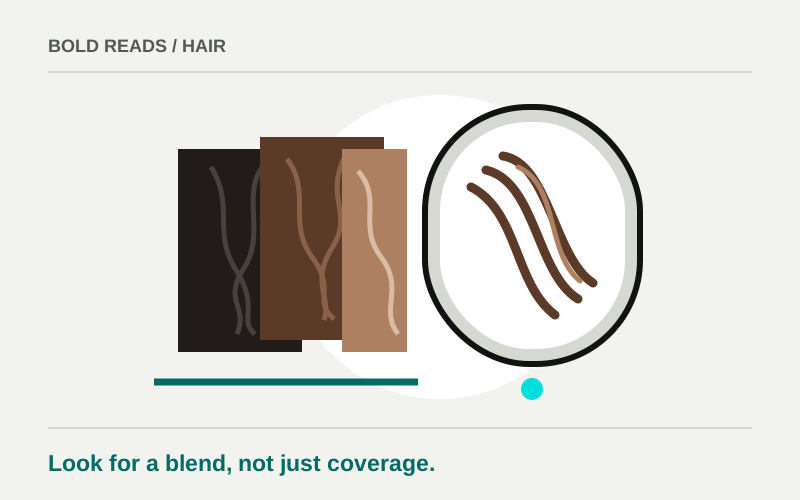
The wrong hair-fiber shade can turn a subtle finishing touch into the first thing you notice. A color that looks convincing on a product page may look different beside your roots. Start with the hair surrounding the area you want to cover, then judge a light application in ordinary daylight. The goal is a believable blend, not the darkest possible coverage.
Match the area you are covering
Look at your crown, part or hairline separately. Which color is most prominent immediately around that area? Long blonde ends do not necessarily describe darker roots, and a few bright highlights do not necessarily describe the rest of the crown.
For a practical comparison, stand near a window without direct sun, move the surrounding hair into its usual position and look from more than one angle. Check both the front and back with a second mirror or a simple photograph. This is an editorial way to judge the appearance, not a calibrated color measurement.
Notice two things: how light or dark the hair looks, and whether its color looks warmer or cooler. A shade name such as “brown” cannot answer both. Phone displays, room lighting and product photographs also introduce uncertainty, so a chart is a reference rather than a guarantee.
Highlights, roots and gray hair need a closer look
- Highlighted hair: compare against the hair around the sparse area, rather than choosing from the lightest strand. A very dark application can create a noticeable patch beside lighter pieces.
- Dyed hair with growing roots: decide which area you are trying to blend today. Recheck after a color appointment; the shade that worked before may no longer be the best visual fit.
- Salt-and-pepper hair: preserve the variation you want to keep. Heavy dark coverage can make the treated area look more uniform than the rest of the hair.
- Mostly gray or white hair: check whether an appropriate shade is actually offered. Do not assume the darkest available color will be a workable substitute.
If the available choices do not seem close, ask for help before ordering. A clear description of your roots and the area you want to cover is more useful than simply saying your hair is “light” or “dark.” You can contact BOLD support about the current options. No chart or remote comparison can promise an exact match.
Use the current BOLD selector, not an old shade list
BOLD Premium Hair Fibers are fine keratin fibers intended to blend with existing hair and temporarily conceal visible thinning. The product page includes a color reference and a selector for ordering. Selectable shades and availability can change; a reference swatch is not proof that a shade is available to buy.
Do not assume a familiar color name will match the same name from another brand. Also, do not improvise a mixing ratio from a photograph. Begin with an appropriate available shade and the current package directions. Fibers change the appearance of coverage; they do not dye new growth or treat hair loss.
Judge a light application before adding more
- Follow the product directions and arrange your hair. Use your usual part so you are judging the area you actually want to cover.
- Begin with light coverage. Keep the first application small enough to assess rather than trying to fill every visible space at once.
- Check the edges. Look where the application meets untreated hair, especially around the part and hairline.
- Move away from the bathroom light. Check in ordinary daylight as well as your indoor mirror. Ask whether the color blends, not just whether less scalp is visible.
- Stop if the shade looks conspicuous. More of an unsuitable color is unlikely to solve a color mismatch. Follow the wash-out directions and reassess.
For placement and application detail, read how to apply hair fibers. If your question is about addressing hair loss itself, our concealment-versus-treatment comparison explains the separate roles.
Make the blend believable
A good shade choice lets your hair remain the focus. Keep the highlights you like, the gray you choose to wear and the variation that makes the rest of your hair look like yours. Before adding another layer, take one step back from the mirror. The useful question is not “Can I hide more?” It is “Does this look like it belongs?”
Sources and further reading
Shade comparisons and mirror checks are practical editorial guidance, not a verified matching formula or a promise of an exact result. Follow the current package directions.