



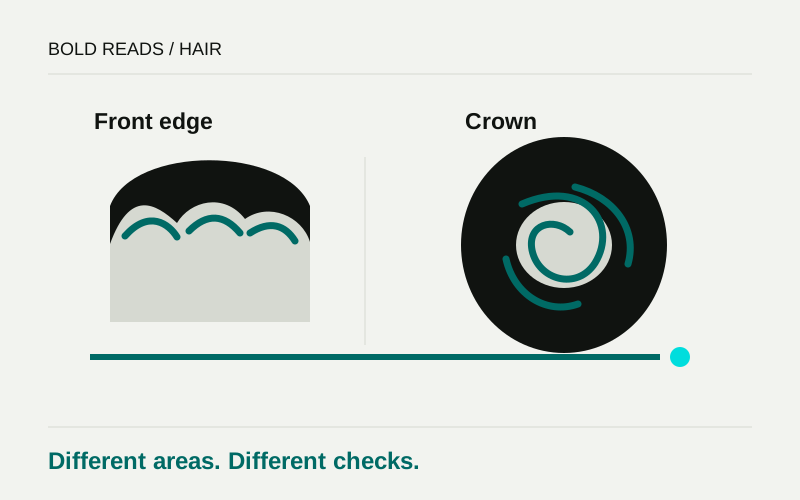
Coverage that blends into your crown can stand out at your hairline. The difference is the boundary: the crown sits inside your hairstyle, while the front edge meets bare skin. Give them different jobs. Use fibers to soften scalp show-through around existing hair, and keep the front edge light enough to belong to the hairline you actually have.
The crown and hairline need different checks
| Area | Useful aim | What to watch |
|---|---|---|
| Crown | Reduce contrast through an area of existing hair. | A concentrated dark patch that ignores the surrounding direction. |
| Front edge | Blend behind the natural boundary. | A straight, dense line or color sitting on bare skin. |
| Part | Soften unwanted show-through beside the part. | Filling an intentional part until the hairstyle loses its shape. |
| Mostly bare area | Recognize the limits of fibers. | Trying to create a new hairline where there is little hair to hold fibers. |
BOLD Premium Hair Fibers provide temporary cosmetic coverage by blending with existing hair. They do not create new strands or regrow hair. Results depend on the hair present, the shade and application. More product cannot remove those limits.
Decide which view bothers you before starting. “The crown looks more exposed from behind” gives you an area to inspect. “Everything must look completely dense” gives you no sensible stopping point.
Set the hairstyle before adding coverage
Begin with the basic preparation in our hair-fiber application guide: dry hair, your usual arrangement and a shade that blends with the area being covered. Avoid using fibers to compensate for a hairstyle you have not finished arranging.
Notice the direction of the hair at the crown. A swirl can naturally reveal some scalp. At the front, notice where substantial hair becomes finer and more spaced out. These are features to work with, not lines to redraw.
Choose an available shade using the current product selector. A photograph or reference swatch cannot guarantee a match. Our shade-selection guide explains how roots, highlights and gray strands affect the comparison.
Work on the crown without chasing every gap
- Find the actual area. Use a second mirror, or one clear photo from above and behind. Compare it with the hairstyle from the front so you know which view you are correcting.
- Start lightly. Follow the current package directions and apply over the existing hair in the thinning area. The BOLD page describes the shaker for broader placement.
- Pause and look again. Check whether the contrast has softened across the area rather than becoming a dark island in its center.
- Keep the surrounding pattern. Do not force every visible line in a natural swirl or part to disappear. Inspect the ordinary overall view before considering another small application.
Use similar lighting for before-and-after checks within your own routine. A strong overhead light and a softly lit mirror can show very different amounts of scalp; switching between them makes it harder to judge your application. This is a comparison aid, not a test of hair growth.
Keep the front edge soft
At the hairline, concentrate on blending within existing hair behind the edge. Avoid trying to paint a new, straight boundary onto exposed forehead skin. The tiny transitions at the front often matter more than how dense the middle looks.
The current BOLD product page offers an optional applicator pump for more precise placement. It is an accessory, not a requirement or a guarantee of a particular finish. Follow its directions instead of inventing a fixed distance or pumping until the edge is opaque.
Check the result from the side as well as straight ahead. If you can see a conspicuous border, pause. Another layer may make that border stronger. Correct the application by following removal directions and starting lighter, rather than pulling or repeatedly brushing through the hair to force a different shape.
A finishing check you can repeat
- Color: does the covered area sit comfortably beside the surrounding hair?
- Boundary: does the front edge still look like your own hairline?
- Direction: can you still recognize the hairstyle, part or crown swirl?
- Amount: is the overall view improved, or are you adding more only because one close-up shows a gap?
Fibers wash out with shampoo according to the BOLD description. Follow the label for use and removal; this guide does not establish waterproofing, exercise resistance or an all-day hold. If you need a finish for a particular occasion, check the current directions and assess your own application ahead of time.
Let your hairline remain yours
A believable finish leaves room for the hair you have: its direction, its edge and its small variations. The crown does not need a dark center, and the hairline does not need a ruler-straight border. Use coverage to make the whole hairstyle easier to wear. The moment a few visible spaces stop demanding your attention can be a better stopping point than the moment every space disappears.