




You remember your face. You remember your shoulders. The part in your hair is easier to miss. If more scalp is exposed at your part, crown or hairline, include it in your sun-protection plan. Looking covered in the mirror and being protected from ultraviolet rays are different things.
Start with the skin you can miss
The U.S. Food and Drug Administration (FDA) lists the hairline and exposed scalp among commonly forgotten sunscreen spots, alongside the ears and back of the neck. Include those areas when you plan protection for time outdoors. FDA sun-safety guidance
Before a walk, yard work or an outdoor event, use a second mirror to check the back of your head. You are making a simple coverage plan, not measuring hair loss. If a hairstyle leaves a part exposed, decide how you will protect that skin before you leave.
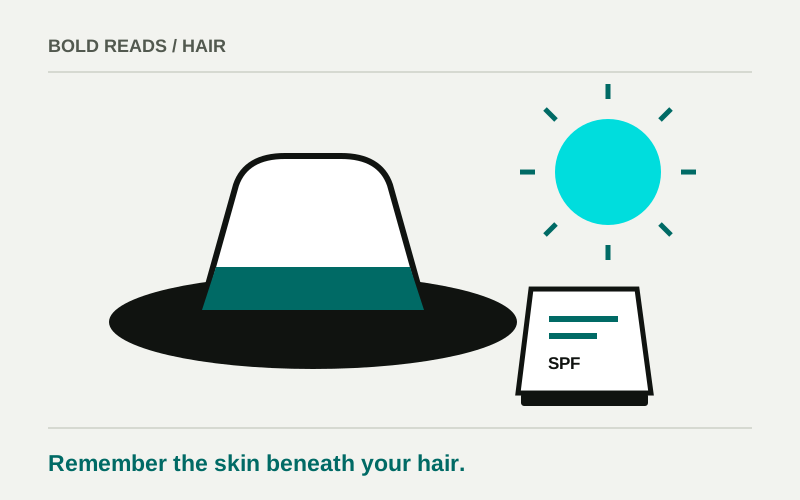
A baseball cap may leave ears and neck exposed. Choose headwear for the areas it actually covers, and check any stated sun-protection rating or material information. A comfortable hat you can keep on is a more workable plan than one you expect to remove as soon as you arrive.
Read three things on the sunscreen label
The American Academy of Dermatology (AAD) recommends sunscreen with SPF 30 or higher, broad-spectrum coverage and water resistance. Broad-spectrum means protection against both UVA and UVB rays. Its application guidance specifically includes sunscreen on a thinning scalp or wearing a wide-brimmed hat. AAD sunscreen application guidance
Water resistant does not mean waterproof. The label specifies whether that protection lasts 40 or 80 minutes while swimming or sweating. Follow the application and reapplication directions, including after toweling, rather than treating a higher SPF as permission to stay out longer.
Choose a format you can apply to the skin, rather than mainly coating the hair. A lotion may make it easier to see where you are applying it along a part; that is a practical preference, not proof it works better than every other labeled format. If using a spray, follow all warnings. The FDA advises against spraying sunscreen directly onto the face.
Make a plan for before and during your time outside
- Apply before you leave. Follow the label’s amount and timing; standard directions call for application about 15 minutes before sun exposure.
- Cover the exposed areas. Include the part, crown or hairline as needed, plus the ears and neck your hat does not cover. Do not use the amount intended for the whole body as a scalp-only dose.
- Pack for reapplication. Bring the sunscreen and keep its label available. Set a reminder if an outdoor activity will make it easy to lose track of time.
- Reapply while outdoors. The AAD advises every two hours and immediately after swimming or sweating. Follow the specific label’s water-resistance and towel-drying instructions too.
- Use shade and headwear. Sunscreen is one part of sun protection. Plan shade breaks and choose a place for your hat when packing, so it is easy to reach.
A quick morning errand and an afternoon at the beach need different logistics. For a longer outing, ask a few ordinary questions: Where is the sunscreen? Will I be sweating? Can I reapply here? Is there shade? Answering those before leaving helps turn a good intention into something you can carry out.
Keep cosmetic coverage separate from protection
BOLD Premium Hair Fibers help conceal visible thinning around existing hair. Their current description does not establish an SPF or tested UV protection. Do not count darker-looking coverage, keratin or a colorant as a sunscreen claim.
If your styling routine makes it difficult to apply or reapply sunscreen properly to exposed skin, simplify the styling or choose suitable headwear. Do not reduce sunscreen coverage to preserve a cosmetic finish, and do not assume layering it with fibers leaves either product’s performance unchanged. Our fiber application guide covers cosmetic use; it serves a different purpose.
Put protection ahead of concealment
Your scalp does not become less deserving of care when your hair changes. Give the exposed skin the same attention you give your face: make space for protection, keep the supplies within reach and choose a routine you can repeat. A fuller-looking finish can be part of your day. Protecting the skin underneath should be part of it too.
Sources and further reading
- FDA: sunscreen labels, sun safety and exposed scalp.
- AAD: choosing, applying and reapplying sunscreen.
- AAD: protecting skin exposed by hair loss.
General sun-protection information is not a diagnosis or individualized product assessment. Follow the actual sunscreen label and seek professional advice about concerning scalp changes.