





A shiny forehead can make moisturizer feel like the last thing your face needs. But surface oil and skin hydration are different parts of the picture. Oily skin can still benefit from moisture care; the useful question is which formula and amount fit your skin, not whether you can make your face feel completely oil-free.
Oil is not the whole hydration picture
The American Academy of Dermatology (AAD) recommends moisturizing after cleansing even for oily skin, while choosing suitable products and avoiding harsh cleansing. It also stresses that care is individual. A comfortable routine is a better goal than repeatedly washing until the skin feels stripped. AAD oily-skin guidance
Moisturizers can work in different ways. Humectants such as glycerin attract and retain water; occlusive ingredients help reduce water loss; emollients soften and smooth. Many formulas combine these roles. Oil on the surface does not tell you how well a particular moisturizer will suit you. DermNet’s moisturizer overview
This does not mean every oily area needs the same amount, or that more moisturizer will cure oiliness. It means you can make the choice by comfort, suitability and purpose rather than judging your whole face by its shiniest spot.
Read the label before the marketing promise
The AAD suggests “oil free” and “noncomedogenic” products for oily skin. Noncomedogenic describes a product intended not to clog pores; it is a useful shopping clue, not a personal guarantee against breakouts. Check the full formula and your own response rather than treating one label phrase as a complete assessment.
Texture also matters. AAD guidance describes gels as often water-based and lighter-feeling than lotions, with creams generally thicker. It also allows lighter choices or less moisturizer for some oily areas. A gel may be a practical starting point if rich textures bother you, but the word “gel” does not prove that the ingredients will suit your skin. AAD moisturizer-selection guidance
If a product adds exfoliating ingredients, an acne treatment or sunscreen, count that as another function. Decide whether you need it. A plain moisturizer can be easier to evaluate when you are already using several active products.
Fit the routine to your face, area by area
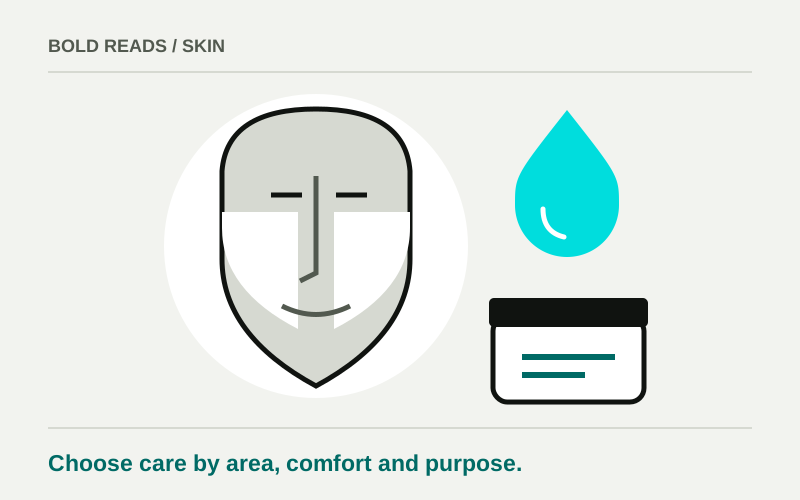
Imagine a face with oily-looking forehead and nose but uncomfortable, dry-feeling cheeks. Covering every area with the same rich layer may not be the most useful plan. The AAD’s moisturizer-selection guidance recommends treating combination skin by area rather than assuming the center of the face needs the same care as the dry spots.
- Notice the separate areas. Write down where you feel dryness, where you see shine and where products tend to feel heavy.
- Choose one purposeful change. A lighter formula or different placement is easier to judge if you keep the rest of the routine steady.
- Follow the moisturizer directions. Apply to the areas that need it, adjusting for comfort without assuming a fixed amount suits every face.
- Check how the whole routine feels. Notice persistent stinging, new irritation or recurring breakouts rather than judging only the finish immediately after application.
Keep sunscreen decisions separate from cosmetic texture adjustments. Do not reduce the labeled sunscreen amount just because the finish feels heavy; consider a suitable alternative formulation instead.
Shop for one missing job, not a whole new routine
You can compare options in BOLD’s facial creams and moisturizers collection. Start with your requirements: intended use, texture, ingredient concerns and whether you already have another product doing the same job. The collection is a place to compare labels, not a recommendation that every item suits oily skin.
The AAD recommends broad-spectrum SPF 30 or higher as part of sun protection. A moisturizer with the appropriate labeled SPF may combine steps if it suits you and you use it as directed; an ordinary moisturizer without that label does not provide established sunscreen protection.
For the broader foundation, see our simple oily-and-combination skin routine. Before introducing a new cosmetic, read how to try a new skincare product cautiously. If irritation persists or acne is difficult to manage, seek professional advice rather than continually adding products.
Build a routine you can keep
The point of moisturizer is not to prove that you have followed every skincare rule. It is to make care work for the skin you have. Choose for comfort and purpose, give each step a reason to be there and let different areas have different needs. You do not need a face that never shines. You need a routine that makes sense beyond the first five minutes in the mirror.
Sources and further reading
- AAD: caring for oily skin.
- AAD: moisturizer formats and area-specific choices.
- DermNet: moisturizer ingredients and roles.
General product-selection guidance does not establish personal suitability or a treatment plan. Follow actual labels and any advice from your clinician.